
The Archive

8460 published sources.

Photographs6119

View all →
photo2024-07-29

Photograph — 29 July 2024 (NurPhoto/NurPhoto)

I appreciate your request, but I'm unable to summarize this document because it appears to be only a photograph with metadata (filename, source, and date), with no actual textual content provided for me to analyze. To give you an accurate summary of the document's contents, I would need either the image itself to be displayed, or a transcript/description of what the photograph shows.

Source: July Diary (archive.julydiary.com)

photo2024-07-20

Portrait of a martyr of the July 2024 uprising

শহীদ ২০ জুলাই ২০২৪ · বয়স ৪৫ · মোবাইল টেকনিশিয়ান

Source: July Diary (archive.julydiary.com)

photo2024-07-29

Photograph — 29 July 2024 (MUNIR UZ ZAMAN/AFP)

I appreciate your request, but I'm unable to summarize this document because it appears to be only a photograph file reference rather than text content. The metadata shows it's a photo taken on July 29, 2024 by photographer Munir Uz Zaman for AFP (Agence France-Presse), but without being able to see the actual image content or any accompanying text, I cannot describe what the photograph depicts or identify its main subjects. To provide an accurate summary, I would need either the image itself or accompanying article text.

Source: July Diary (archive.julydiary.com)

Videos & Documentaries1550

View all →
video2024-08-04

Video, 2024-08-04

I'm unable to summarize this document because it appears to be a video file reference without any actual content, transcript, or description provided. The document listing only shows a filename, file type (video), date, and category labels, but no information about what the video actually contains. To provide you with an accurate summary, I would need either a transcript of the video, a description of its content, or the ability to view the video itself.

Source: July Revolutionary Alliance (JRA)

News Articles573

View all →
news article

July 22: As death toll hits 187, Hasina meets business leaders amid nationwide crackdown

This news article, published by Dhaka Tribune, is a retrospective piece commemorating the one-year anniversary of events on July 22, 2024, during Bangladesh's "Monsoon Revolution" — a period of widespread anti-government protests centered on quota reform. The article covers three main topics: the escalating violence and crackdown, in which the death toll reached 187, nearly 1,200 people were detained, and a curfew was in place with only a brief four-hour relief window; Prime Minister Sheikh Hasina's response, in which she met with business leaders and blamed Jamaat-Shibir and the BNP for orchestrating the unrest, while BNP denied involvement and characterized it as a student-led movement; and the protest movement's status, including student coordinators losing contact with four colleagues and demanding their whereabouts be disclosed within 24 hours, and coordinator Nahid Islam relocating for security after being previously abducted. Overall, the article paints a picture of a deeply polarized political crisis, with the government framing the unrest as a political conspiracy while protesters and opposition figures characterized it as legitimate, student-led resistance against state oppression.

Source: Dhaka Tribune

news article

Adviser: Uprising victims to be recognized as 'July Martyrs’, 'July Warriors'

This news article from the Dhaka Tribune (published February 17, 2025) reports on the Bangladeshi government's official recognition and compensation plan for victims of the July 2024 uprising. Liberation War Affairs Adviser Faruk E Azam announced that those killed during the movement will be formally designated "July Martyrs" and the injured will be called "July Warriors," with each group receiving official certificates and identity cards. The article details specific financial benefits, including Tk30 lakh for martyrs' families, a Tk20,000 monthly allowance plus Tk5 lakh one-time payment for severely injured victims, and lesser amounts for those who lost limbs. Additionally, the government announced the near-completion of a "July Directorate" to oversee these programs, with injured survivors also being prioritized for government employment and vocational training.

Source: Dhaka Tribune

news article2024-08-07

Turmoil at Bangladesh Bank: 6 top officials including BB deputy governors forced to resign

This news article from the Dhaka Tribune reports on a major institutional crisis at Bangladesh Bank (BB) on August 7, 2024, when hundreds of bank officials stormed the central bank's Motijheel headquarters demanding the resignations of top leadership. The protesters, accusing senior officials of supporting former Prime Minister Sheikh Hasina's government and enabling bank looters, forced four deputy governors (Kazi Sayedur Rahman, Nurun Nahar, Md Khurshid Alam, and Md Habibur Rahman), BFIU head Masud Biswas, and bank advisor Abu Farah Nasser to resign or sign blank papers under duress. The article details that Deputy Governor Sayedur Rahman submitted a handwritten resignation and was escorted out under army protection, while others verbally promised to resign but did not submit written documents. The Bangladesh Bank's spokesperson confirmed that since these officials were government-appointed, their resignations would be formally processed by the incoming interim government. Governor Abdur Rouf Talukder was notably absent from the office throughout the events.

Source: Dhaka Tribune

news article

July 30: Now it’s black vs red

This news article from the Dhaka Tribune covers events of July 30, 2024, during what is referred to as Bangladesh's "Monsoon Revolution." It centers on a symbolic confrontation between the ruling Awami League government and anti-quota student protesters, represented visually by black versus red — the government declared a national day of mourning (symbolized by black badges), while protesters defiantly wore red clothing and changed their social media profile pictures red in resistance. Key topics covered include the Anti-Discrimination Student Movement (ADSM) organizing symbolic protests, teachers at multiple universities rallying in solidarity, Transparency International Bangladesh demanding the release of detained student leaders, Amnesty International condemning mass arrests, and the government's announcement that Jamaat-Shibir would be banned by executive order on July 31. Critics such as Professor Asif Nazrul and BELA's Syeda Rizwana Hasan publicly condemned the government's violent crackdown on protesters.

Source: Dhaka Tribune

news article

Information sought on July revolution casualties by Jan 31

This news article from Bangladesh (published January 1, 2025) reports that a government special cell is seeking information about casualties from the July-August 2024 student-public uprising. A first phase list of those martyred or injured during the protests (July 15 to August 5, 2024) has already been published online, but authorities are now inviting applications for individuals who were left off that initial list. The deadline for submitting applications is January 31, 2025, and applicants must provide supporting documents including national ID, proof of medical treatment, and contact information, submitted to designated local government offices or the July Shaheed Smrity Foundation.

Source: Dhaka Tribune

news article

What is happening at the National Institute of Ophthalmology and Hospital?

This news article from the Dhaka Tribune (published June 12, 2025) reports on an ongoing crisis at the National Institute of Ophthalmology and Hospital in Agargaon, Bangladesh, where regular outpatient services have been suspended for over two weeks, with only emergency services operational. The crisis was triggered on May 25, 2025, when four injured protesters from the July 2024 uprising allegedly consumed poison during a meeting to protest what they described as negligent treatment. Tensions escalated on May 28 when protesters demanded medical treatment abroad, leading to a physical clash between hospital staff and protesters that resulted in a complete nine-day shutdown. The hospital's daily patient footfall dropped from its normal 3,000–4,000 people to virtually none. A government-appointed expert committee examined the patients and concluded that treatment had been satisfactory, recommending discharge or referral rather than overseas treatment, though 24 of 54 patients refused examination. Hospital authorities expected full operations to resume on June 14, while protest representatives warned of a renewed movement following the Eid holiday period.

Source: Dhaka Tribune

Social Media160

View all →

Posters21

View all →
poster2024-07-10

Urgent instructions notice regarding road blockade emergency lane

A notice instructing protesters to bring long ropes for blocking roads and to maintain an emergency lane during blockades for ambulances, medical emergency patient vehicles, journalists, fire service, and movement coordinators' vehicles, issued under the banner of the Students Against Discrimination movement.

Source: July Revolutionary Alliance (JRA)

poster2024-07-07

July 7 ScienceLab Blockade Announcement

This is a protest announcement poster calling for a blockade at ScienceLab on July 7, listing participating institutions including Dhaka College, Eden Mohila College, and Garhosthyo Arthonity Institute, issued by the Students Against Discrimination movement.

Source: July Revolutionary Alliance (JRA)

poster2024-07-04

Sit-in Program Poster Demanding Reinstatement of 2018 Circular

This is an announcement poster for a sit-in demonstration demanding reinstatement of a 2018 government circular, organized by a student movement against discrimination, scheduled for July 4, 2024 at the Central Library of Dhaka University.

Source: July Revolutionary Alliance (JRA)

Documents15

View all →
document

Manabzamin newspaper front page: funeral of teacher Abdus Samad Hadi draws huge crowd

This is the front page of the Bangladeshi daily Manabzamin dated 21 December 2025, leading with a report and photograph of the funeral prayer of a religious teacher referred to as Hadi, attended by a massive crowd, alongside other news items including a 24-hour ultimatum to arrest his killers, the death of A. K. Khandaker, and Zubaida Rahman's departure for London.

Source: July Revolutionary Alliance (JRA)

document2024-07-08

Newspaper clipping: 'Bangla Blockade' brings capital to a standstill

A Bengali newspaper page reporting on the 'Bangla Blockade' protest that paralyzed the capital during the quota reform movement, with photographs of large crowds of demonstrators marching, and a related article questioning whether all quotas will be reinstated.

Source: julyonrecord, via July Revolutionary Alliance (JRA)

document

Daily Sun front page reporting burial of July uprising figure 'Hadi' beside Nazrul

This is the front page of the Daily Sun newspaper dated Sunday, 21 December 2025, featuring a large photograph of a massive crowd gathered for the funeral of 'July hero Hadi' at Dhaka University, who was buried beside poet Nazrul Islam. The page also includes several other headlines including one about a 24-hour deadline to arrest killers and one about corruption in the healthcare sector.

Source: July Revolutionary Alliance (JRA)

document

The Business Standard front page, 21 December 2025 - Osman Hadi's funeral and other news

Front page of The Business Standard newspaper dated Sunday, 21 December 2025, covering the funeral of Osman Hadi beside Kazi Nazrul Islam's grave, an ultimatum from Inqilab Mancha over Hadi's killers, UN chief's call for calm amid mob attack concerns, a report on losses at state-owned sugar mills, and a government initiative to clear courier cargo outside Dhaka airport.

Source: July Revolutionary Alliance (JRA)

document

Front page of Daily Kalbela newspaper featuring BNP vigilance and Osman Hadi tribute

This is the front page of the Bangladeshi newspaper 'Daily Kalbela', containing multiple news stories including BNP's political vigilance, a tribute to Osman Hadi, an ultimatum given to the Home Affairs Adviser regarding investigation progress, and a large crowd photograph, along with other headlines and an advertisement.

Source: July Revolutionary Alliance (JRA)

Reports & Investigations11

View all →
report

Injured — recorded casualties of the July 2024 uprising

Tabular record of people injured during the July 2024 uprising: name, age, gender, occupation, institution and place of the incident where known. Compiled by the July Revolutionary Alliance. 11,527 records.

Source: July Revolutionary Alliance (JRA)

report

Martyrs — recorded deaths of the July 2024 uprising

Tabular record of people killed during the July 2024 uprising: name, age, gender, occupation, institution, date of death and place of the incident where known. Compiled by the July Revolutionary Alliance. 151 records.

Source: July Revolutionary Alliance (JRA)

report

New Study Delves Into the Internet Shutdowns of Bangladesh’s 2024 Uprising - Digitally Right

This document is a report by Digitally Right Limited and OONI (Open Observatory of Network Interference) examining the internet shutdowns that occurred during Bangladesh's student-led uprising from July 15 to August 5, 2024 — the country's longest internet shutdown at 22 days. The report reconstructs a verified timeline of the shutdowns, maps how they were enforced across different network layers, and assesses their implications for human rights and accountability. Main Topics Covered Scale and tactics: The shutdown involved multiple control methods including nationwide blackouts, bandwidth throttling, cache server deactivations, and social media/VPN blocking Correlation with violence: The most intense network disruptions coincided with spikes in casualties during the protests Governance and opacity: Shutdowns were executed through informal directives (including via WhatsApp) by multiple overlapping government bodies (BTRC, NTMC, DoT) with little transparency ISP involvement: Internet service providers and mobile operators were instructed to implement restrictions, often through verbal or informal orders Circumvention crackdown: Authorities actively blocked VPNs and other tools used to bypass restrictions The report concludes that internet shutdowns functioned as a central state tool to suppress dissent and control information during the political crisis that ultimately led to Sheikh Hasina's fall from power.

Source: Digitally Right

report2024-07-18

Amnesty International briefing: Bangladesh quota reform protests (July 2024, ASA 13/8372/2024)

This document is an open letter dated July 2024 from Amnesty International Secretary General Agnès Callamard to Bangladeshi Prime Minister Sheikh Hasina, expressing grave concern over the violent government crackdown on student-led "quota reform" protests in Bangladesh. The letter documents that between 147 and 211 people were killed by security forces — including police, RAB, Border Guards, and military — who used birdshot, tear gas, and AK-pattern assault rifles against protesters, alongside violence perpetrated by the ruling party's student wing (BCL). The letter specifically condemns a nationwide internet shutdown lasting 11 days, shoot-on-sight curfew orders, a blanket ban on protests under Section 144, and the mass arrest of approximately 10,000 people with over 213,000 individuals accused in police cases. Amnesty International also highlights the broader pattern of suppressing dissent through repressive legislation such as the Digital Security Act and Cyber Security Act. The letter concludes with six concrete demands, including lifting the curfew, releasing detained protesters, ensuring accountability for unlawful killings, cooperating with a UN investigation, providing reparations to victims, and repealing repressive laws such as the Cyber Security Act 2023.

Source: Amnesty International

report2024-06-15

OHCHR Preliminary Analysis of Recent Protests and Unrest in Bangladesh (16 August 2024)

This is a preliminary human rights analysis report published by the UN Office of the High Commissioner for Human Rights (OHCHR) on August 16, 2024, examining the protests and political unrest in Bangladesh between July and August 6, 2024. The report documents how initially peaceful student protests — triggered by a court ruling reinstating a 30% civil service job quota for descendants of 1971 independence war veterans — escalated into a major political crisis, resulting in hundreds of deaths (including at least 32 children), thousands of injuries, and the resignation and flight of Prime Minister Sheikh Hasina on August 5, 2024, followed by the formation of a civilian Interim Government under Dr. Muhammad Yunus. The main topics covered include: Excessive force and extrajudicial killings by security forces, including the Rapid Action Battalion Arbitrary arrests, torture, and enforced disappearances Internet shutdowns restricting communications and press freedom Nationwide curfews limiting freedom of movement Post-government-collapse attacks on religious minorities (particularly Hindus) across 27 districts Recommendations to the Interim Government and international community for accountability, security sector reform, and democratic transition

Source: UN Office of the High Commissioner for Human Rights

report2024-07-15

The Longest Silence: Internet Shutdowns During Bangladesh’s 2024 Uprising

This investigative report, published by Digitally Right and OONI (Open Observatory of Network Interference) in July 2025, documents and analyzes the internet shutdowns that occurred in Bangladesh between July 15 and August 5, 2024, during the student-led uprising that ultimately resulted in the resignation and departure of Prime Minister Sheikh Hasina. The report reconstructs a verified chronological timeline of the shutdowns across five distinct phases, detailing how authorities deployed multiple overlapping tactics — including two complete nationwide internet blackouts (July 18–23 and August 5), mobile data throttling, broadband speed reductions, selective blocking of social media platforms (Facebook, WhatsApp, Instagram, Telegram, YouTube, and others), and crackdowns on VPN services — making it the longest and most geographically extensive internet shutdown in Bangladesh's history. Key findings include that the most severe disruptions directly coincided with the deadliest periods of protest violence (with an estimated 1,400 total deaths during the period), that shutdown directives were issued informally — often via WhatsApp — by multiple government bodies including BTRC, NTMC, and the Department of Telecommunications with little transparency or legal documentation, and that technical evidence from OONI, IODA, Cloudflare Radar, and Google traffic data independently corroborates the timing and scale of each disruption phase documented through media reporting and operator interviews.

Source: Open Observatory of Network Interference (OONI)
Government Documents2

government document

বাংলাদেশ সরকারের সংস্কার কমিশন

সারসংক্ষেপ এটি বাংলাদেশ সরকারের প্রধান উপদেষ্টার কার্যালয় কর্তৃক গঠিত সংস্কার কমিশনসমূহের প্রতিবেদনের একটি সরকারি দলিল। ২০২৪ সালের জুলাই-আগস্টের ছাত্র-জনতার গণঅভ্যুত্থানের পর ফ্যাসিবাদী শাসনের অবসান ঘটিয়ে নতুন শাসনব্যবস্থা গড়ে তোলার লক্ষ্যে ড. মুহাম্মদ ইউনূসের নেতৃত্বে মোট ১১টি সংস্কার কমিশন গঠন করা হয়েছে। প্রতিবেদনে মূলত নিম্নলিখিত বিষয়গুলো অন্তর্ভুক্ত রয়েছে: সংবিধান, নির্বাচন ব্যবস্থা, বিচার বিভাগ, জনপ্রশাসন, পুলিশ, দুর্নীতি দমন কমিশন, গণমাধ্যম, নারী বিষয়ক, শ্রম, স্থানীয় সরকার, স্বাস্থ্যখাত সংস্কার এবং গুম সংক্রান্ত তদন্ত। এছাড়াও জুলাই জাতীয় সনদ ২০২৫ এবং ২০১৪, ২০১৮ ও ২০২৪ সালের জাতীয় নির্বাচন তদন্ত প্রতিবেদনও এতে অন্তর্ভুক্ত রয়েছে।

Source: reform.gov.bd

government document

ছাত্র জনতার গণ অভ্যুত্থানে নিহত ও আহত ব্যক্তিবর্গের তালিকা

This is an official government document published by the Bangladesh Ministry of Health and Family Welfare (Directorate General of Health Services, Management Information System) containing a draft list of individuals killed and injured during the student-people's mass uprising (ছাত্র জনতার গণ অভ্যুত্থান). The database, compiled from various public and private hospitals across Bangladesh, includes 833 entries of deceased individuals, searchable by name, NID, father's name, hospital, religion, occupation, gender, and geographic location (division/district). The document also provides instructions for family members to register, verify, correct incomplete records, or add missing names through the relevant healthcare facilities or Civil Surgeon offices.

Source: medical-info.dghs.gov.bd

Broadcasts1

broadcast

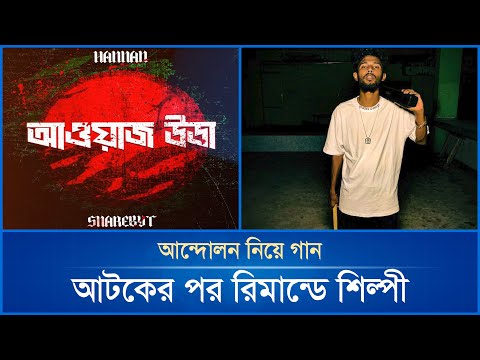
'আওয়াজ উডা' গানের কারণে রিমান্ডে! | Mytv News

''আওয়াজ উডা' গানের কারণে রিমান্ডে! | Mytv News' — protest rap from Bangladesh's July 2024 uprising, archived from a community playlist of the movement's rap songs. Bengali rap was one of the uprising's protest mediums; songs circulated as anthems at marches and online. Archived as a primary source; lyrics are not transcribed — listen to the recording.

Source: Mytv News

Songs & Music8

View all →
song

SIAM - Pani Lagbe Pani (পানি লাগবে পানি) | Mugdho (মুগ্ধ) | BANGLADESH

'SIAM - Pani Lagbe Pani (পানি লাগবে পানি) | Mugdho (মুগ্ধ) | BANGLADESH' — protest rap from Bangladesh's July 2024 uprising, archived from a community playlist of the movement's rap songs. Bengali rap was one of the uprising's protest mediums; songs circulated as anthems at marches and online. Archived as a primary source; lyrics are not transcribed — listen to the recording.

Source: SIAM

song

Ek Dofa (এক দফা) | Bangla Rap Song | Rafsan Ahmed Siam | (এক দফা দাবি নিয়ে রেপ গান)

'Ek Dofa (এক দফা) | Bangla Rap Song | Rafsan Ahmed Siam | (এক দফা দাবি নিয়ে রেপ গান)' — protest rap from Bangladesh's July 2024 uprising, archived from a community playlist of the movement's rap songs. Bengali rap was one of the uprising's protest mediums; songs circulated as anthems at marches and online. Archived as a primary source; lyrics are not transcribed — listen to the recording.

Source: Rafsan Ahmed Siam

song

কোটা চাইনা, মেধা চাই রেপ Song ২০২৪। ​⁠! Imtiaz Akib

'কোটা চাইনা, মেধা চাই রেপ Song ২০২৪। ​⁠! Imtiaz Akib' — protest rap from Bangladesh's July 2024 uprising, archived from a community playlist of the movement's rap songs. Bengali rap was one of the uprising's protest mediums; songs circulated as anthems at marches and online. Archived as a primary source; lyrics are not transcribed — listen to the recording.

Source: Imtiaz Akib

song

SIAM - Abu Sayed ( আবু সাঈদ ) | BANGLADESH

'SIAM - Abu Sayed ( আবু সাঈদ ) | BANGLADESH' — protest rap from Bangladesh's July 2024 uprising, archived from a community playlist of the movement's rap songs. Bengali rap was one of the uprising's protest mediums; songs circulated as anthems at marches and online. Archived as a primary source; lyrics are not transcribed — listen to the recording.

Source: SIAM

song

Desh Kar? দেশ কার? - Lunatix Veer X Rhythmsta | Quota Reform Movement Bangladesh | GoatZilla

'Desh Kar? দেশ কার? - Lunatix Veer X Rhythmsta | Quota Reform Movement Bangladesh | GoatZilla' — protest rap from Bangladesh's July 2024 uprising, archived from a community playlist of the movement's rap songs. Bengali rap was one of the uprising's protest mediums; songs circulated as anthems at marches and online. Archived as a primary source; lyrics are not transcribed — listen to the recording.

Source: Lunatix Veer & Rhythmsta

song

SAHAN - Rajakar ( রাজাকার ) | BANGLADESH

'SAHAN - Rajakar ( রাজাকার ) | BANGLADESH' — protest rap from Bangladesh's July 2024 uprising, archived from a community playlist of the movement's rap songs. Bengali rap was one of the uprising's protest mediums; songs circulated as anthems at marches and online. Archived as a primary source; lyrics are not transcribed — listen to the recording.

Source: SAHAN

Ask